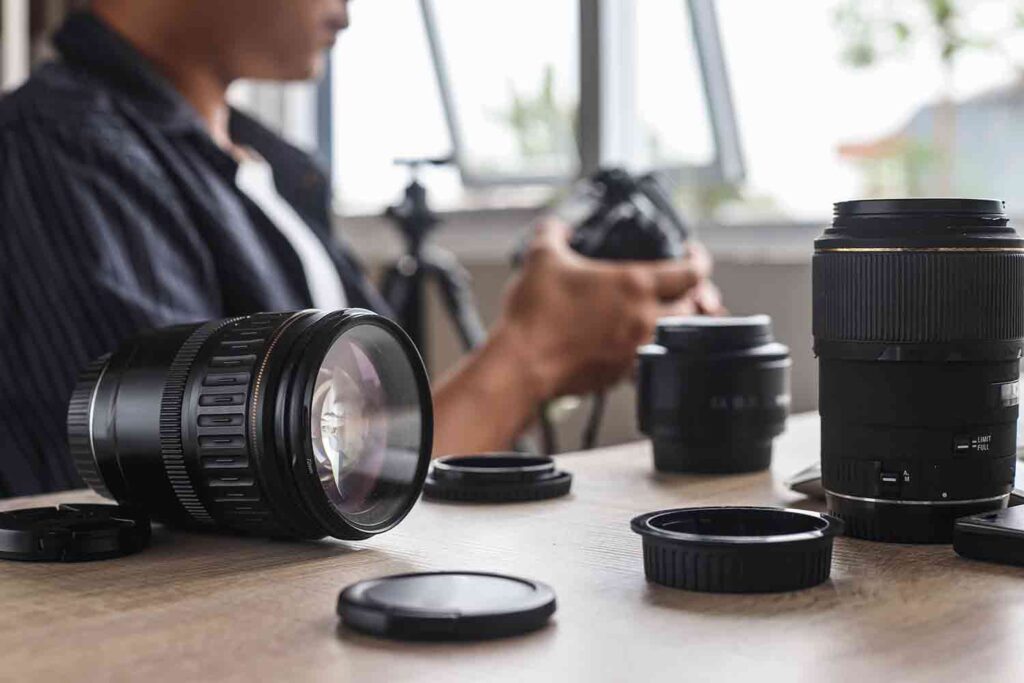
Lenses are one of the most important tools in filmmaking because they directly affect how the audience experiences a story. Different lenses create different perspectives, emotions, and visual styles, making lens selection a key part of cinematic storytelling.
Wide lenses are often used to show environments, landscapes, and large spaces. They can make a location feel bigger and help establish context. They are also useful for dynamic camera movements and scenes with multiple subjects.
Standard lenses provide a more natural perspective that feels similar to the human eye. These lenses are commonly used for interviews, dialogue scenes, and everyday moments because they create balanced and realistic compositions.
Telephoto lenses allow filmmakers to isolate subjects and create a shallow depth of field. They are often used for emotional close-ups because they draw attention to facial expressions and small details while softening the background.
Lens choice also affects mood. A wide-angle close-up can feel dramatic or uncomfortable, while a longer lens can make a scene feel more intimate and cinematic. Understanding focal length, compression, and depth of field helps filmmakers choose the right visual language for each moment.
At DASS Producciones, we select lenses based on the story, the emotion, and the visual style we want to create. The right lens does more than capture an image — it shapes the way the audience feels.